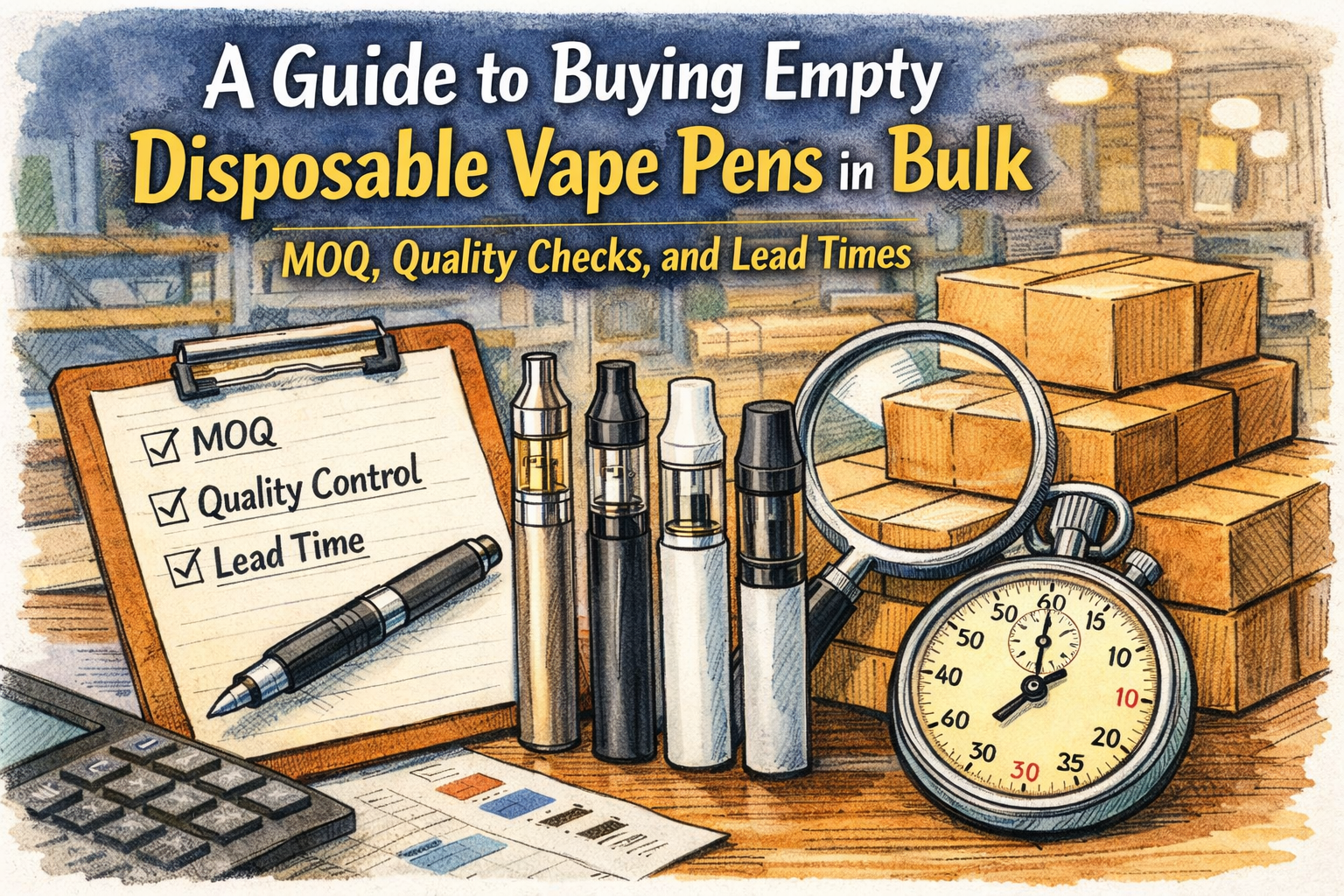
A Guide to Buying Empty Disposable Vape Pens in Bulk: MOQ, Quality Checks, and Lead Times
Buying empty disposable vape pens in bulk can be a smart move for distributors, private-label brands, packaging resellers, and hardware-focused wholesalers. When purchasing at scale, the goal is not simply to find the lowest unit price. The real objective is to source hardware that is consistent, compatible, visually appealing, and ready to support stable reorders over time. A bulk order that arrives late, performs unevenly, or fails to match your filling requirements can create much bigger costs than a slightly higher upfront quote.
This guide explains what wholesale buyers should review before placing an order, how to compare suppliers more effectively, and which practical checks can help reduce risk. Whether you are buying for a new launch or restocking proven SKUs, the same fundamentals apply: confirm specifications, request clarity on lead times, verify quality control, and make sure the product fits your business model.
Start with your business requirements
Before comparing catalogs, define exactly what you need from the hardware. Bulk purchasing works best when your team has a clear checklist. Start with capacity, battery size, charging format, oil compatibility, draw style, finish options, and packaging expectations. If your business serves multiple customer segments, divide the order by use case instead of trying to force one device to fit every need.
For example, some buyers prioritize compact and cost-efficient options for fast-moving inventory, while others want more premium shells, upgraded finishes, or stronger presentation for branded programs. If you are still evaluating options, browsing a larger bulk disposable category can help you compare formats, capacities, and branding directions before choosing a final shortlist.
Understand MOQ before you negotiate
MOQ, or minimum order quantity, is one of the first terms buyers focus on, but it should be judged in context. A low MOQ may sound attractive, yet the real question is whether the supplier can maintain the same quality and availability when your volume increases. Likewise, a higher MOQ may still make sense if it gives you better unit economics, priority production, or stronger packaging support.
Ask the supplier whether MOQ changes by model, color, branding method, warehouse location, or accessory bundle. You should also confirm whether sample orders can be converted into production orders later. This can make testing more efficient and lower the cost of supplier evaluation. In addition, clarify how mixed-model orders are handled. Some wholesalers allow mixed SKUs within one order, while others apply MOQ per individual model.
Check compatibility, not just appearance
One of the most common bulk buying mistakes is selecting hardware based mainly on looks. Visual design matters, especially in competitive retail channels, but compatibility matters more. Empty disposable vape pens should match the intended filling process, viscosity range, and operational expectations of your business. A shell that looks premium but performs inconsistently can lead to complaints, returns, and unnecessary rework.
Ask detailed questions about tank volume, intake design, charging port type, airflow behavior, and any available filling guidance. If your team works with multiple oils or packaging styles, verify which configurations are best suited for each case. It is also wise to ask whether the same model has been updated recently, since small design changes can affect filling efficiency and user experience.
Request quality-control details in writing
Serious bulk buyers should never rely on vague promises such as “good quality” or “stable performance.” Instead, ask the supplier what quality-control steps are applied before shipment. Request clear information about visual inspection, leak checks, charging checks, component consistency, and packaging inspection. Even if the supplier does not share a full internal process, the level of detail in the answer tells you a lot about operational maturity.
You should also ask how issues are handled if a shipment arrives with defects or mismatched items. A reliable partner should be able to explain their process for claims, replacements, or order support. This is especially important when you are ordering for resale or downstream distribution.
Lead times matter as much as price
Many wholesale buyers focus on price first and shipping second. In practice, lead time can be just as important as cost, especially when you are coordinating launches, warehouse transfers, or recurring customer demand. A cheaper order that misses your selling window can damage cash flow and delay future purchasing plans.
Ask for separate timing estimates for sample preparation, production, packing, and dispatch. If the supplier offers inventory from different warehouse regions, confirm which items are truly in stock and which still require production. Buyers should also ask whether lead times change during promotions, peak seasons, or customization periods. The best supplier is not always the one with the lowest headline price, but the one that can deliver predictable timing with clear communication.
Evaluate branding and packaging support
If you are buying for a brand program, packaging support may be a deciding factor. Even when the hardware itself is empty, consistency in presentation can affect customer trust and reorder rates. Ask what customization options are available, what artwork formats are accepted, and how production timelines change when branding is added.
It is helpful to confirm whether the supplier can support repeat runs with the same finish, color, and printed details. This reduces the risk of visual inconsistency between batches. If your operation depends on uniform shelf presentation, document approved references and keep records for future purchase cycles.
Compare total landed value, not only the unit quote
When reviewing multiple suppliers, compare the full buying picture rather than looking only at per-piece pricing. Total landed value includes product consistency, warehouse availability, shipping speed, support responsiveness, and how much risk the order creates for your business. A slightly higher unit cost may still be the better choice if it reduces delays, defects, or communication problems.
Create a simple scorecard for each supplier using the same criteria: MOQ flexibility, model range, specification clarity, quality-control transparency, packaging options, lead time reliability, and support after shipment. This makes decision-making more objective and easier to repeat as your purchasing volume grows.
Always review compliance and market fit
Wholesale buyers should make sure the products they source are suitable for their intended market and sales structure. Requirements can vary by region, channel, and business type, so it is important to review local rules, packaging expectations, and any restrictions that may apply before scaling an order. A supplier can provide hardware details, but the buyer is still responsible for ensuring the purchase aligns with the target market.
For that reason, internal approvals should happen before the final bulk payment is released. This step is often overlooked, especially when buyers are moving quickly to lock pricing.
Final thoughts
Buying empty disposable vape pens in bulk is not only a procurement task; it is a business decision that affects product quality, fulfillment speed, and long-term customer confidence. The strongest buyers do not chase the cheapest listing. They build a repeatable sourcing process based on fit, consistency, and supplier clarity.
If you define your requirements early, verify compatibility, review quality-control practices, and confirm lead times before payment, you will make better purchasing decisions and reduce avoidable problems later. In wholesale hardware buying, good preparation is usually what separates a smooth reorder cycle from a costly mistake.

 ACE Ultra
 Muha Meds
 Big chief
 Besos
Besos Clean Carts
 Cookies
 Packman
 Sluggers
 Tyson pod
 Whole Melt
 California Honey
 USA Warehouse
 UK Warehouse
 POLAND Warehouse