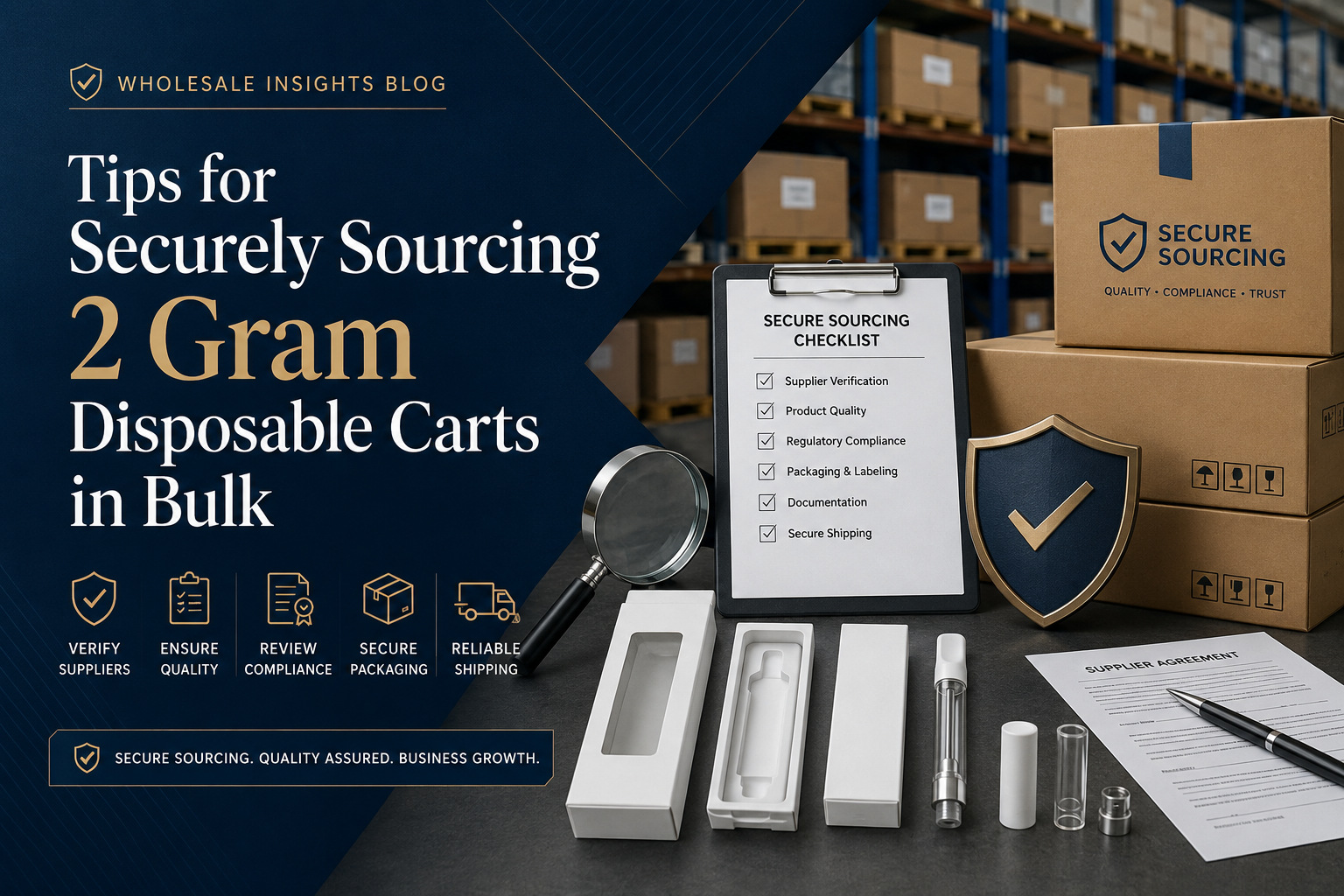
Sourcing 2 gram disposable carts in bulk should be handled as a careful B2B review process, not a quick price decision. Buyers need to confirm empty only wording, capacity, product category, supplier records, quote terms, import documents, and public compliance resources before approving a bulk order.
Buyers looking for 2 gram disposable carts in bulk should begin with the correct capacity category, then review empty only wording, supplier background, written quotes, import records, and public compliance sources. This approach keeps the buying process practical and reduces confusion during repeat orders.
Confirm that the product is sold empty only and is not pre-filled.
Compare 2g options with other 2g options, not unrelated formats.
Check whether the quote matches the product name, capacity, and URL.
Review supplier records before increasing order quantity.
Keep written records for quotes, product pages, packing notes, and shipment details.
1. Start from the Right Capacity Category
A secure sourcing process starts with the right category. A buyer should not compare a 2g product with a 1g or 3g option and assume the price difference is meaningful. Capacity affects product planning, packing review, order quantity, label review, and warehouse handling.
The shop by capacity page helps buyers review products by capacity group before making a shortlist. This is useful when the purchasing team needs a clear structure for comparing empty only products across different sizes.
A practical sourcing sheet can include product name, capacity, empty only wording, product URL, quoted quantity, packing notes, warehouse note, quote date, and contact person. Keeping these details in one place helps reduce errors when the same item is reordered later.
2. Confirm Empty Only Wording
Empty only wording should be checked before any bulk order is approved. A product page, quote, invoice, and packing note should clearly match. If one document uses unclear wording, ask for written confirmation before payment or shipment planning.
Buyers can review the wider empty disposable vape category to understand how empty only products are organized across the catalog. This broader category supports the main topic while helping buyers compare other empty only options when needed.
For internal review, use direct wording such as: “This product is sold empty only and is not pre-filled.” Avoid vague wording that could be misunderstood by purchasing, warehouse, labeling, or resale teams.
3. Compare Capacity Before Price
Price is important, but capacity should be reviewed first. A low quote is not useful if the buyer is comparing different capacity groups, different packing requirements, or different warehouse timing. Secure sourcing means comparing similar products under the same review rules.
Before judging price, buyers should confirm the 2g category, product name, order quantity, sample status, packaging requirements, warehouse location, and expected handling timeline. A quote that does not show these details should be clarified in writing.
If a supplier offers multiple 2g options, build a simple comparison table. Include product URL, quantity, unit price, empty only wording, packing details, lead time, and any special note. This keeps the process organized without turning the article into a hard sales page.
4. Understand Carts and Disposable Carts Wording
Buyers often use the word “carts” in different ways. Some buyers mean empty cartridges, while others mean disposable cart-style products. Because the wording can vary by market, it is important to confirm the exact product type before sending a purchase order.
If the project involves cartridges rather than disposable cart-style products, the empty vape cartridges category can help buyers review a more relevant product group. If the project is focused on 2g disposable cart-style products, the 2g capacity category should remain the main internal link.
A clear sourcing note should say whether the buyer needs disposable cart-style empty only products, empty cartridges, samples, or a specific capacity group. Clear wording helps avoid delays before production planning or shipment review.
5. Check Supplier Background Before Scaling
Secure sourcing is not only about product selection. It also includes supplier background checks, communication quality, document consistency, payment records, and after-order support. A buyer should be extra careful before moving from a sample order to a large bulk order.
For a real product review example, buyers can check Empty Clean Carts 2g Disposable Bulk and compare the page name, capacity, empty only notice, and category placement with the quote. This type of product page review helps the buyer confirm that the item being discussed is the same item being quoted.
Before scaling, ask the supplier for written confirmation of product name, quantity, packing plan, warehouse note, payment terms, timeline, and any required custom work. If the supplier cannot keep the wording consistent across messages and documents, slow down the process and clarify before placing the order.
6. Review Records, Claims, and Public Resources
Public resources can help buyers build a safer sourcing process. They do not replace legal, customs, or compliance advice, but they are useful starting points for supplier review, import preparation, quote checking, and claim control.
Supplier background checks
Trade.gov provides a supplier due diligence checklist for companies that need background information on a foreign business partner. Buyers can also review Trade.gov background check tips before working with a new supplier or increasing order quantity.
For website review, the ICANN registration lookup can help buyers check domain registration data as one part of a wider supplier review process.
Import and shipment preparation
Cross-border buyers should review import requirements before placing a bulk order. CBP provides tips for new importers and basic import guidance covering core import topics, including entry, processing, duties, fees, and port information.
USAGov also offers an import license or permit check for buyers who need a starting point before confirming agency-specific requirements.
Regulated-market resources
Buyers whose products may enter regulated markets should review FDA compliance resources and the FDA’s FDA retail compliance rules. These resources help explain why records, age-restriction review, and market requirements matter.
The FDA also maintains an FDA authorized products list for buyers who need to check official authorization status before making any market-facing claim.
Price, reviews, trademark, and origin wording
If a supplier uses discount or deal wording, compare the quote with the quantity table and final invoice. The FTC provides deceptive pricing resources that help businesses understand why price comparisons should not mislead buyers.
Reviews should not be the only reason to trust a supplier. The FTC explains review authenticity rules for businesses that use consumer reviews or testimonials.
Brand names, package wording, and logo use should be checked before resale or custom packaging. The USPTO trademark search can help buyers begin a basic name review.
If a product page or quote mentions USA stock, do not automatically turn that into a U.S. origin claim. The FTC offers U.S. origin claim guidance for businesses using Made in USA or similar language.
Bulk Sourcing Review Table
Review Point
What to Check
Why It Matters
Capacity
Confirm the product belongs in the 2g category.
Prevents unfair comparison with unrelated formats.
Empty only wording
Check product page, quote, invoice, and packing note.
Reduces confusion during purchasing and shipment review.
Product URL
Save the product page link with the quote.
Helps the team confirm what was reviewed at approval time.
Supplier background
Review business records, domain data, and written communication.
Supports safer sourcing before scaling to bulk orders.
Import records
Check required forms, permits, and shipment documents.
Helps avoid delays and documentation gaps.
Claims
Review pricing, review, trademark, and origin wording.
Helps avoid unsupported or misleading claims.
Buyer Checklist
Is the product clearly sold empty only?
Does the quote match the product name, capacity, and URL?
Is the product compared with other 2g options?
Does the supplier provide written packing and timeline details?
Have you reviewed supplier background before increasing quantity?
Have import documents, permit needs, and regulated-market resources been checked?
Are price claims, review claims, trademark use, and origin wording supported by records?
Securely sourcing 2 gram disposable carts in bulk means building a repeatable review process. Start from the correct capacity category, confirm empty only wording, compare like-for-like options, check supplier records, and keep written proof before moving forward with bulk purchasing.
Editorial note: This article is for general B2B sourcing education only. Requirements vary by market, order plan, product use, labeling, import route, and resale channel. Work with qualified legal, compliance, and trade professionals before importing, labeling, marketing, or distributing finished products.
A smoother experience begins with responsible product selection, careful inspection, clean handling, and awareness of warning signs. This guide provides

 ACE Ultra
 Muha Meds
 Big chief
 Besos
Besos Clean Carts
 Cookies
 Packman
 Sluggers
 Tyson pod
 Whole Melt
 California Honey
 USA Warehouse
 UK Warehouse
 POLAND Warehouse