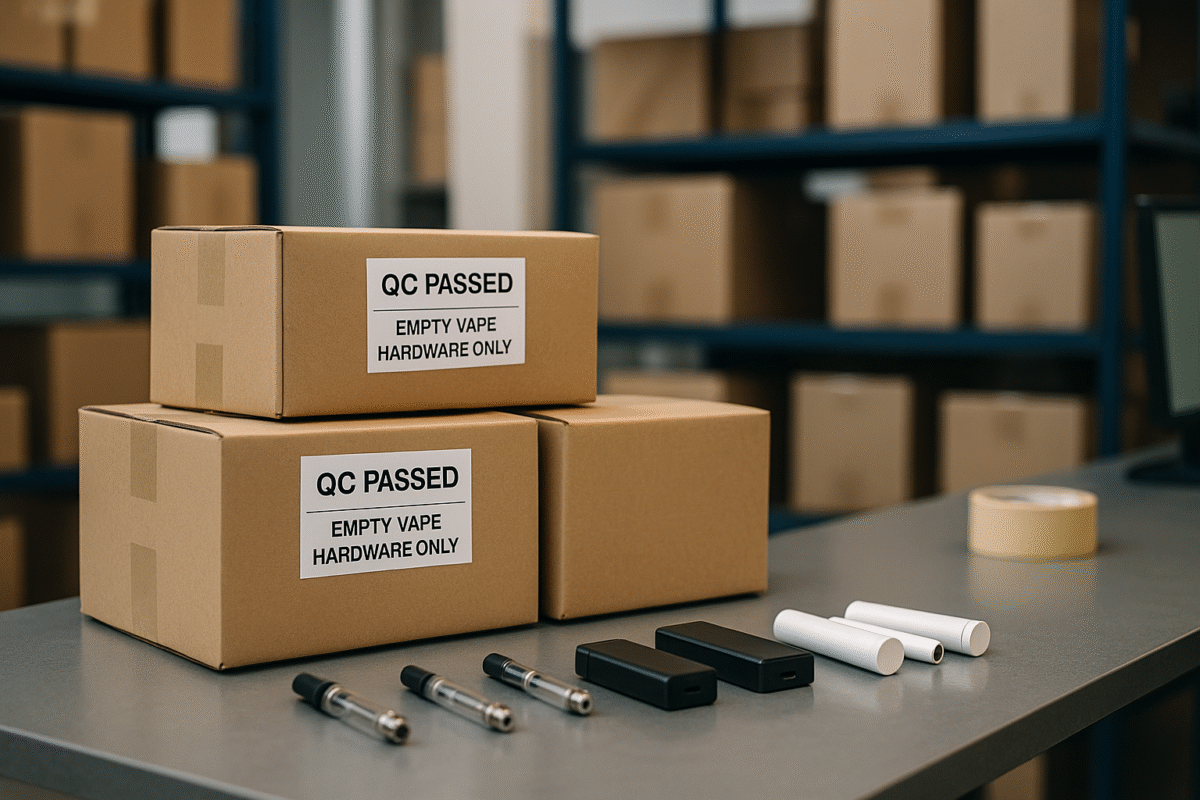
Empty hardware only. This article discusses vape devices as hardware components (shells, cartridges, batteries, packaging). It does not include any e-liquid, nicotine, THC, or filling instructions.
“Factory direct” is a powerful promise in B2B sourcing—until it turns into inconsistent batches, leaky units, and packaging that arrives crushed. This 2025 playbook shows how to buy empty vape hardware at competitive prices without sacrificing the quality signals retailers and distributors care about: repeatable QC, testable packaging, and documentation that keeps shipments moving.
1) What “factory direct” should mean (in practice)
In the vape supply chain, “factory direct” should not just mean a lower unit price. It should mean you can verify: (1) the hardware is a real, consistent BOM (bill of materials), (2) the factory can repeat the same build across batches, and (3) the packaging and documentation match how the product is sold and shipped.
Regulators often describe ENDS as systems that include components and parts (not just finished retail units), which is why serious B2B programs treat hardware sourcing and packaging as a controlled, auditable workflow—not a one-off purchase
Vape Factory — start at the catalog level so buyers see the full program.
cheap vape — use this in content to capture price-intent searches, but support it with QC and packaging proof points.
custom packaging — tie packaging to shelf-readiness and shipping survivability.
2) “Cheap vape” vs. low total cost
Buyers search “cheap” because they want margin. But in wholesale hardware, the true cost sits in returns, rework, delays, and brand damage—especially when devices clog, leak, arrive scratched, or ship in weak cartons. A better target is low total cost per sellable unit.
Where “cheap” goes wrong
Batch-to-batch variance (same SKU, different internal build)
Loose tolerances leading to leaks or poor airflow consistency
Packaging that looks fine on a desk but fails in parcel shipping
Missing shipping docs for lithium batteries or incomplete paperwork
What you want instead
A defined spec sheet + golden sample
Simple QC gates (incoming, in-process, outgoing)
Packaging tested or designed around realistic distribution stress
Shipment-ready documentation and predictable lead times
3) A factory evaluation checklist for empty hardware
You don’t need an engineering team to ask “engineering-grade” questions. You just need a checklist that forces clear answers. Here are the highest-leverage items for empty disposables, carts, and shells:
Build & materials (repeatability)
Defined BOM: coil type, heating element material, mouthpiece material, gaskets, and tank material each specified.
Process controls: how the factory controls key tolerances that affect leaks and airflow.
Traceability: batch/lot identification that shows up on cartons or inner packs.
Performance signals (customer experience)
Leak resistance: what tests are used (pressure hold, thermal cycling, vibration exposure).
Clog resistance: what design features reduce condensation pooling or restrictive airflow.
Consistency: how many samples are checked per batch and what constitutes a fail.
Commercial signals (B2B readiness)
Sampling policy: pre-production sample, pilot run, and a “golden sample” stored for comparisons.
MOQ / lead time clarity: separate numbers for device hardware, packaging, and combined kitting.
Support window: what happens if a defect pattern is found after arrival.
4) QC workflow: sample → pilot → production
The fastest way to scale a “factory direct” program is to make QC boring and repeatable. Here’s a simple workflow many global buyers use:
Step A — Pre-production sample (the “golden” reference)
Approve a sample that represents the exact build you want: cosmetic finish, assembly feel, and packaging dielines. Save one sealed unit as a “golden sample” so every new batch can be compared against the same reference.
Step B — Pilot run (catch issues before the big PO)
Run a small batch that uses real production tooling and packaging. Confirm the top failure modes: leakage, loose fittings, cosmetic scratches, button/screen function (if applicable), and carton protection.
Step C — Production inspection (sampling beats guessing)
Use a sampling plan so inspection is consistent and defensible. Many inspection workflows reference the ISO 2859 family (often discussed in QC as AQL-based sampling) to determine sample size and defect thresholds for a batch.
Tip: Define “critical / major / minor” defects in writing (e.g., leak = critical; severe cosmetic damage = major; small scuff = minor).
5) Custom packaging that survives shipping
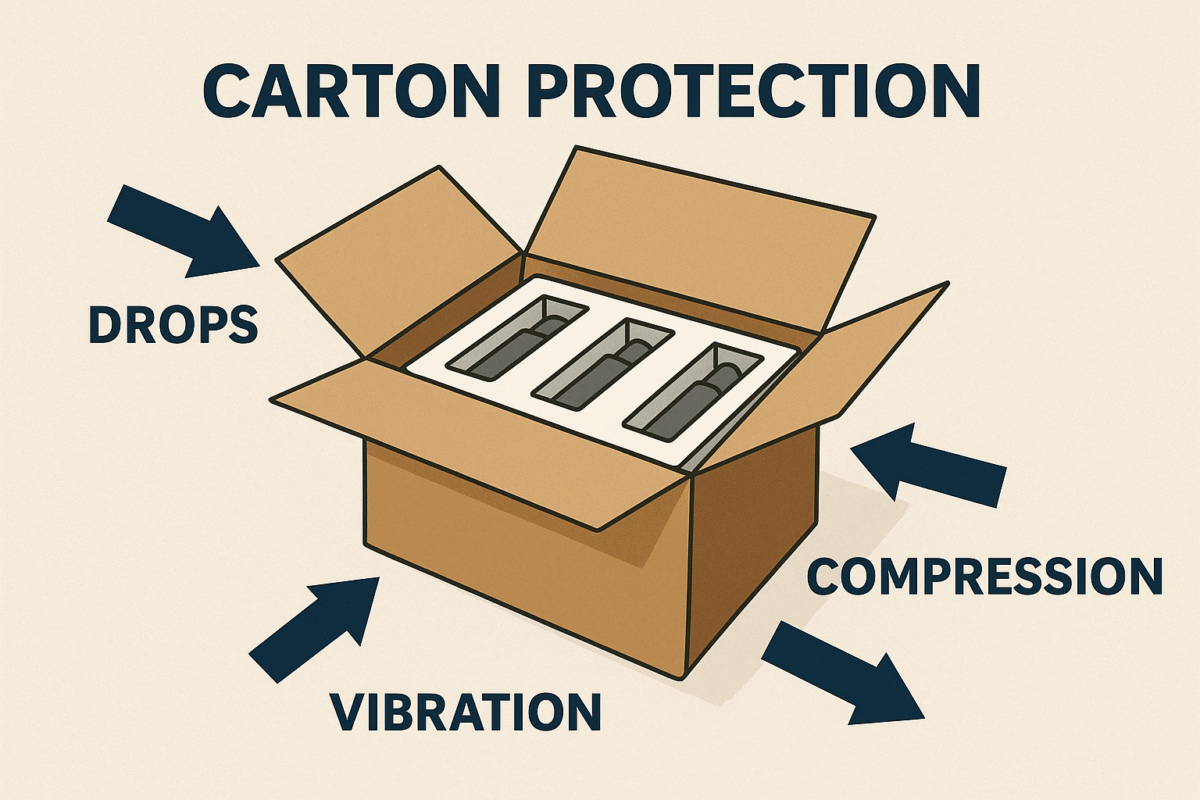
Packaging is not just branding—it’s the protection system that keeps units sellable. For “factory direct” programs, the goal is: shelf-ready packaging that stays intact through parcel handling.
Inner protection: inserts, trays, or sleeves that prevent rattle and abrasion.
Barcode readiness: leave a clean zone for SKU/lot labels, and keep them scannable on curved surfaces.
Why parcel-shipment testing matters
If you ship DTC or ship wholesale cartons through standard parcel systems, packaging can face drops, vibration, and compression. ISTA Procedure 3A is widely referenced as a parcel-delivery simulation for packaged products under typical weight limits, making it a practical benchmark when you design cartons and inserts.
Many empty disposable devices and batteries fall under lithium battery shipping rules. At a high level, global shipment readiness often means: (1) batteries meet UN 38.3 testing expectations, (2) your logistics partners can provide or recognize required summaries, and (3) you follow current air-transport guidance for lithium batteries.
UN 38.3: the UN Manual of Tests and Criteria subsection 38.3 outlines design tests for lithium cells/batteries.
Test summaries: U.S. PHMSA maintains guidance on lithium battery test summaries and revisions.
IATA guidance: air shipping guidance documents are updated periodically.
Note: This section is intentionally high-level. Your exact documentation needs depend on configuration, mode of transport, and carrier requirements.
7) A simple RFQ template (so quotes stay comparable)
When you request quotes, inconsistency in your RFQ is the #1 reason pricing becomes meaningless. Use a template like this so each supplier is quoting the same thing:
Logistics: shipping terms, carton pack-out, and required documentation expectations
Timeline: sample time, pilot time, full production time
If your supplier can answer these cleanly, you’re far closer to a predictable “factory direct” program—and your margins won’t be eaten by surprises.
8) FAQ
How do I keep “cheap vape” pricing without quality issues?
Tie price to a defined spec and inspection gates. The moment a supplier can change materials or assembly without notice, “cheap” becomes expensive. Lock the build with a golden sample, pilot run, and consistent batch inspections.
What should I ask first when a supplier claims “factory direct”?
Ask for the BOM scope, sampling policy, and packaging protection approach. If they can’t describe repeatability, you’re buying a gamble, not a supply program.
Why does custom packaging matter so much for wholesale?
Because damaged packaging becomes unsellable inventory. Strong packaging reduces returns, improves shelf presentation, and helps standardize labeling and SKU handling across warehouses.
Sources
Selected references used to support the QC, packaging, and shipping concepts in this article:

 ACE Ultra
 Muha Meds
 Big chief
 Besos
Besos Cookies
 Packman
 Tyson pod
 California Honey
 Jungle boys
 Packwoods